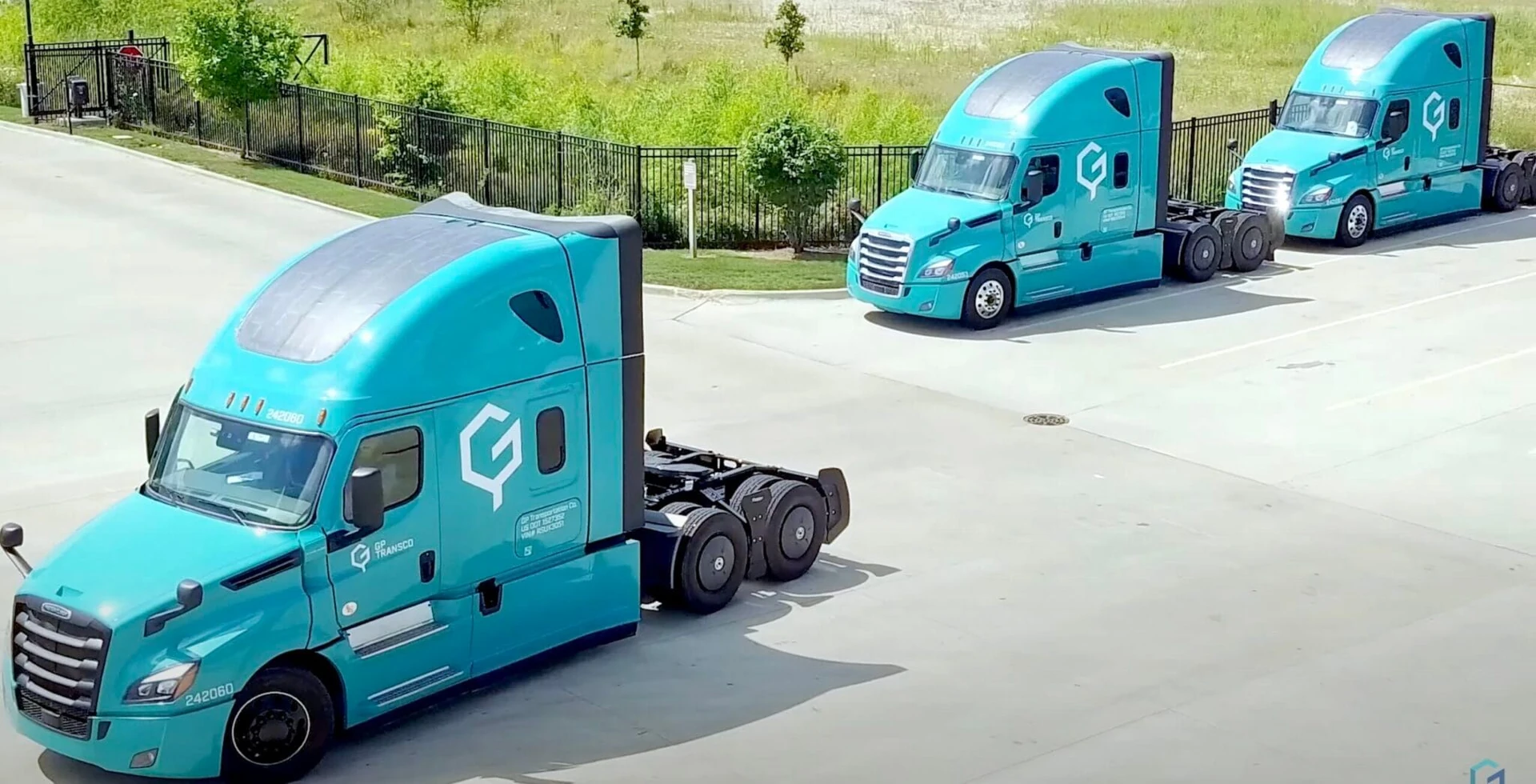
A tractor may spend time parked with connected equipment drawing from its batteries. Understanding that period is as important as understanding the driving day.
Bring route patterns, parked intervals and battery-service concerns into the evaluation. The aim is to establish where supplemental charging may be useful—not to assume every truck needs the same system.
WHERE TO FOCUS
Three parts of the truck day.
01
Before dispatch
Record starting condition, battery history and any recurring jump-start requirement.
02
During driver breaks
Identify the cab equipment and auxiliary loads expected to remain in use.
03
Between assignments
Review parked time, shading and the charging sources already available.
04 / AUXILIARY POWER
Know what draws power. And when.
Merlin identifies starter-battery maintenance and cab hotel loads among its transportation applications.
For your truck, separate essential equipment from optional cab loads. List the equipment, its duty time and the battery bank it uses so a technical discussion starts with a defined requirement.
Flexible Merlin modules are a product category to evaluate for truck surfaces. An appropriate model and charging arrangement must be selected for the actual vehicle.
Ask for the current datasheet, controller requirements and the permitted installation method. Do not infer a complete truck kit or universal battery compatibility from an application photograph.
05 / MODULE & CHARGING REVIEW
A roof surface. A charging architecture.
INFORMATION FOR A TRUCK REVIEW
Measure the constraints.
01
Cab geometry
Document usable cab area, curvature, obstructions and cable entry restrictions.
02
Battery arrangement
Provide battery type, nominal voltage and existing alternator or auxiliary charging equipment.
03
Service access
Identify maintenance access and the vehicle requirements that an installation must preserve.
07 / A MANUFACTURER EXAMPLE
Learn from a fleet. Evaluate your own.
Merlin’s GP Transco case study describes solar used for tractor auxiliary power during breaks. It is a relevant truck example, not evidence of an Envonex installation.
Use it to frame the questions for your own operation: what is powered during dwell time, what battery problem is being addressed and how will a trial be assessed? No reported savings or service-life result is promised for another fleet.
Solar can provide an additional charging input alongside the truck’s existing electrical system. The final arrangement depends on the selected equipment and charging configuration.
Cab equipment is typically assessed as part of the vehicle’s wider electrical system. Share the appliance loads, battery setup and conversion equipment so the right configuration can be reviewed.
Module fit depends on the roof or fairing surface, mounting restrictions and the selected product’s installation instructions. Send the vehicle details for a more specific review.
Share the truck model, available mounting area and electrical requirements. Envonex can review the application using current Merlin Solar product information.
MANUFACTURER REFERENCES
Go to the source.
Manufacturer references describe particular applications. They do not establish the suitability or results of an unreviewed Canadian project.